The Democratic Republic of Congo remains one of the richest in terms of natural resources yet is still one of the poorest countries in the world. Its colonial history was savage. There was a failure to hand over any semblance of administrative and executive governance during the country’s pathway to Independence in 1960. The result is a tragic trail of dictators who, through corruption, have prospered while their people have struggled.
It’s in this environment that Permafund’s grant program has entered its 17th country by partnering with an NGO known as the Union of Women for Rural and Community Development which goes under the acronym UFEDERCO.
They’ve been operating in the region of South Kivu in the east of the DR Congo since 2015. They have a broad range of areas where they assist the most vulnerable women and children with food security and sustainable agriculture, legal and judicial assistance for victims of gender based sexual violence, the promotion of the environment, education and access to water.
The AU 2000 Grant Permafund provided went directly into starting food gardens in 2 primary schools. The project aims to fight against malnutrition in schools, improve the economic and social livelihoods of women in poor families and increase food and organic seed production to make the region more resilient toward food sovereignty.
Most of the budget was for the purchase of the initial seeds and equipment for making the garden beds. The materials were distributed to 700 students from the 2 schools as well as to 60 women farmers selected on need who then formed Permaculture committees to oversee the project. The main crops grown include cabbage, potatoes, eggplant, amaranth, onions, peppers, carrots, and dongodongo.
700 school children benefitrd from the permaculture training supported by Permafund
Also part of the project was a series of educational training related to Permaculture topics such as developing soil fertility and making organic pesticides. Over 70 marginal farmers were involved in this training.
Utilising garden tools was part of the students’ training
This was an early report from the project which seems to be going well. The main outcomes will occur at harvest time, and then how well they can save the seeds so that the school gardens continue to go on year after year.
This is the type of project where Permaculture can make a big difference…..where the need is great. $2000 is allowing 700 children and over 100 women farmers to have a chance at a better quality of life by improving their nutrition. We’ll keep in contact with this group in the Congo and look forward to both further reports and maybe assisting them again in the future.
Fundraisers such as open gardens and community events to support Permafund’s micro-grant program are a wonderful help and are very much appreciated.
All gifts, tithes and donations made by individuals and businesses to the Permafund that are over $2 are tax deductible in Australia and are warmly welcomed.
Contributions to the Permafund can be made here. Many thanks.
by Greta Carroll – Permaculture Australia Board Member and Chairperson
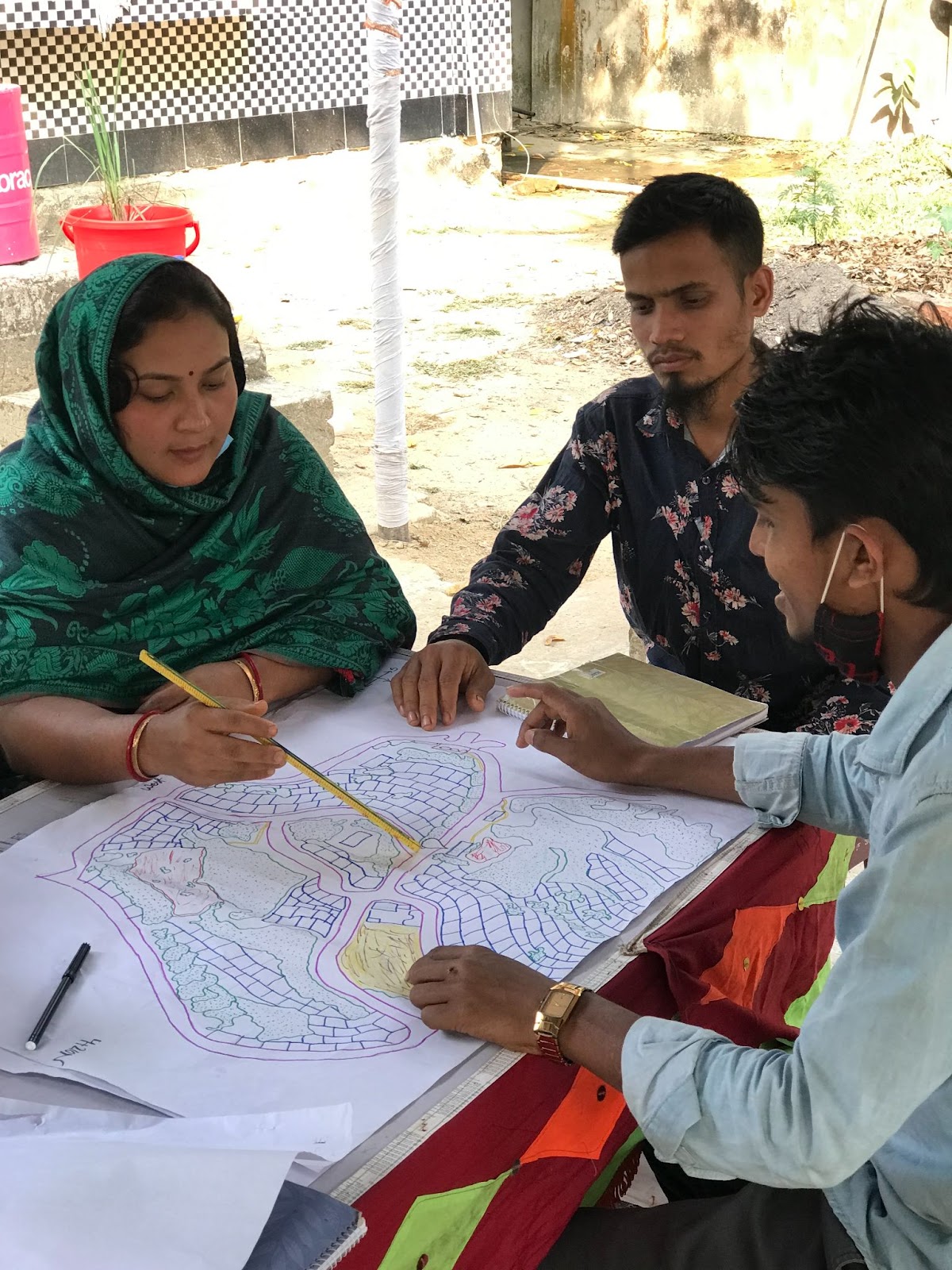
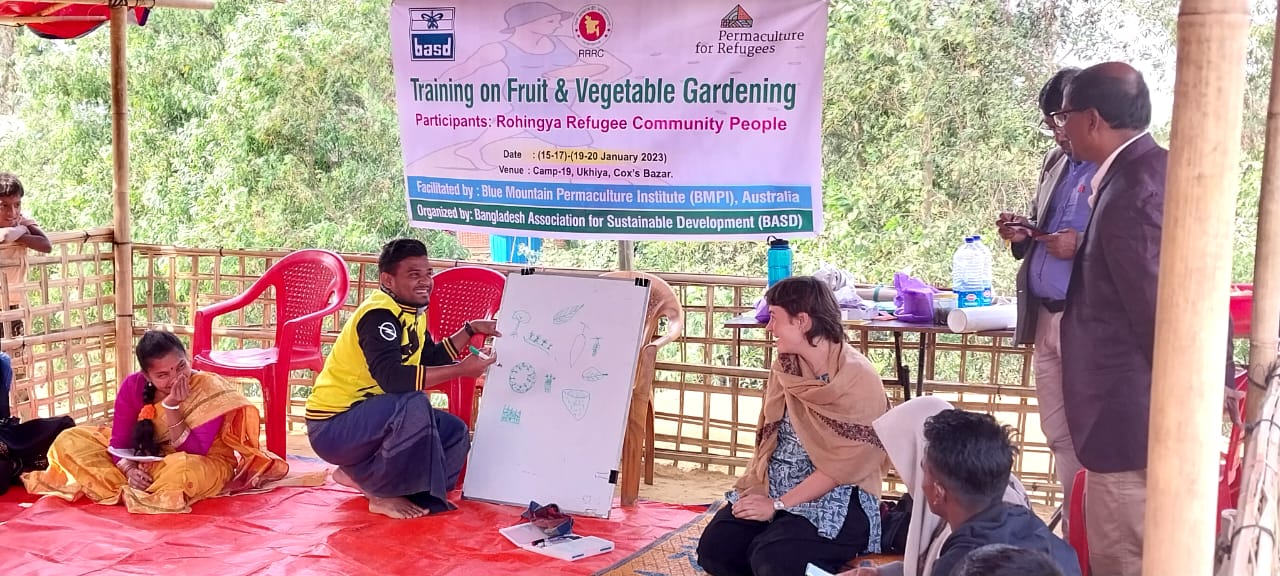
The Permaculture design ethics and principles have always been used in physical landscape design. Growing in popularity and importance is their application in social landscapes and businesses. For example, Meg McMgowan used the ethics and principles to teach new officers in the NSW Fraud Squad, Permaculture for Refugees uses them for an approach to working with people who have experienced displacement, a museum curator uses them to set up new exhibitions, and PermaQueer use them to demonstrate the difference between extractive, reductionist cultures and more syntropic, regenerative ways of being in the world.
For the last five years most of my work has been in permaculture education. I spend a lot of time thinking about the way culture, methods, and tools create effective learning environments, and designing and delivering educational experiences in Australia as well as overseas.
Below is a non-exhaustive and constantly evolving list of some of the ways I use permaculture ethics and principles as a teacher. I’ve drawn on content from Rowe Morrow’s Permaculture Teacher Training Book where I think it’s useful.
Ethics
Earth Care – What options do we have for catering in our courses? Can you passively heat or cool the venue to rely less on fossil fuels? Sitting under the shade of a tree is often much nicer than a hot, stuffy classroom.
Can I find teaching tools that are reusable, recycled, multi-functional, biodegradable and/or locally produced?
What does the language I use say about the relationship I have with the Earth? Do I speak from a power-over- or anthropocentric paradigm?
People Care – What are the roles and responsibilities of learners outside of the classroom, and how can we ensure we’re accommodating them in our course designs? A needs analysis might tell us we need to offer childcare, provide something for breakfast for students who haven’t eaten, not teach on a Friday or start and finish earlier to miss peak hour traffic.
In our facilitation, are we catering for a variety of learning styles, cultures and mobility needs?
Teachers must be expected to model best People Care practices, including avoiding using sarcasm, ridicule or violence towards their students. There is never ever any excuse or reason to exploit the power a teacher is given by virtue of their role as a teacher. No sexual approaches by teachers to learners are ever OK. When they happen, a serious breach of trust and permaculture ethics has been committed (Morrow).
Fair Share– This can be expressed in many forms; from sharing questions among all participants rather than allowing one or two people always to answer, offering scalable fees or scholarships to allow people of all resource levels to learn, and sharing the boring work of cleaning and washing up.
PRINCIPLES
Acknowledge the local knowledge, custodians and history of the land (Principle 0) –
What is my relationship to the land we’re teaching/learning on? Do I have permission to be on that land? Have I acknowledged the history and the custodians of the land we’re gathering on?
Sometimes I teach in places where rightful custodianship has changed many times throughout history, and I acknowledge all the people, plants and animals who have passed through that landscape, carrying and sowing seeds, cleaning water and building soils over time.
I think about the blindspots I have due to my social/cultural background. Is there someone better placed than I to share knowledge of certain things? Who can speak to the local languages of regeneration? Can others share their own story?
And especially when I am in cross-cultural teaching spaces; What cultural ways of knowing, being and doing are in the room? How can I maintain and support existing ecological knowledge rather than imposing my own learning, opinion or culture? What are your seasons? How do you build soils? What foods do you like to grow? How do you store water and seeds? Can you draw your grandparents’ house?
Finally, whose voices, knowledge and perspectives am I referencing and sharing through my teaching? Are they all of the same straight-male-settler demographic?
Observe and Interact –
Who are your learners? What do they already know? Can you observe what is happening in class and adapt to better suit their needs? This might mean returning to a topic to explain it more clearly, changing the class plan to better suit students’ learning edges and interests. Change lunch hours, or opening and closing times, speak louder, slow down, use graphics not words. You can think of more.
Catch and Store Energy –
Education itself is a practice of catching or gathering energy (information, skills and even physical resources) from people, projects, and landscapes around us and storing it in our communities and relationships for future use.
As Tyson Yunkaporta says “relationships are the only way to store data safely in the long term”.
Integrate rather than Segregate –
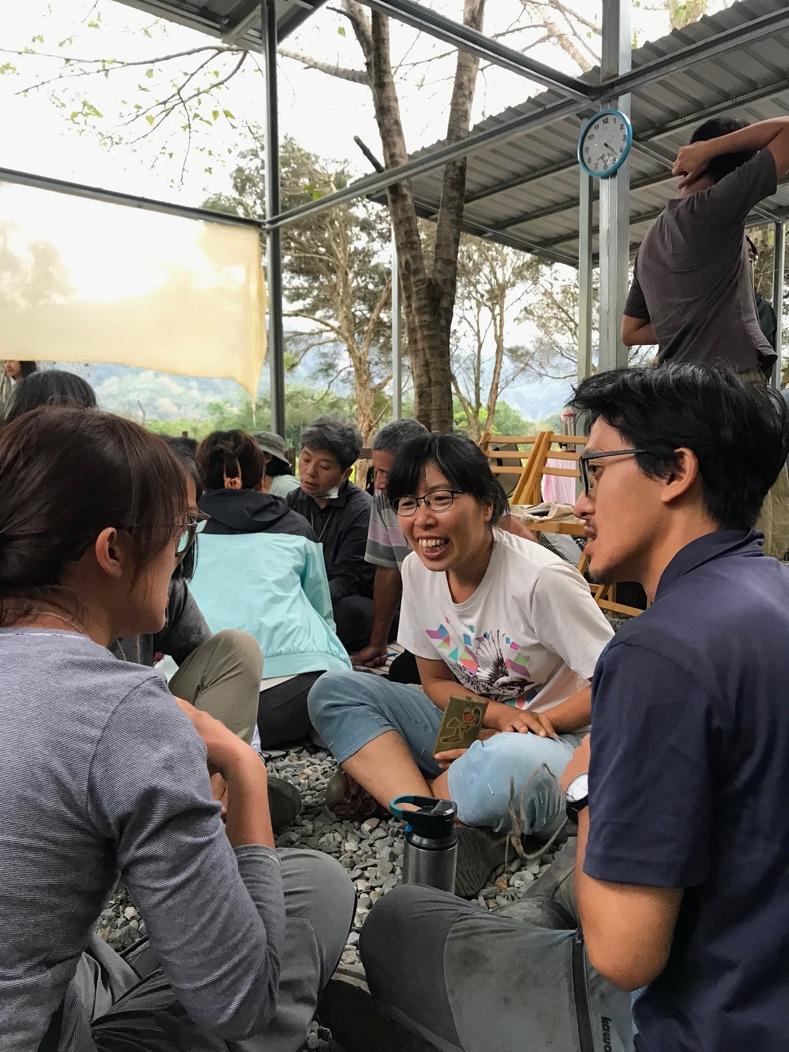
Learning in groups is an effective teaching method that functions to accelerate learning and produce creative solutions and ideas. When the right conditions are created, cross-cultural exchange enriches learning environments and can build confidence in students. Are there opportunities for peer-to-peer learning?
Did you know that group discussions are a highly effective tool for creating attitudinal change? When peers share stories in small groups, attitudinal change is more likely to occur through than through lectures (Morrow).
Design from patterns to details –
Can you design learning experiences using this principle? Start with a needs, functions and products analysis of the learning ecosystem or community you are in. This will help identify your overall course objectives as well as the structure (length, days, times etc). Next consider the flow of the learning journey; the order and layering of topics or information. Write the session learning objectives, and finally choose teaching methods and activities to match.
Obtain a Yield –
I teach to learning objectives and ensure I can measure them. We know learning has happened when participants can explain it, make it, draw it or do it. Our yields in education are the competencies we see demonstrated by the end of a session and at the end of a course. This is critical.
Produce No Waste –
Linked to the two principles above. How can you minimise wasted time? When we have structure and teach to learning objectives, we reduce the likelihood of going off on tangents and wasting students’ time.
Also linked to Earth Care, can I choose learning/teaching materials that aren’t polluting? Such as refillable markers, pencils over pens, crayons or pastels over textas, masking tape and bulldog clips over blu tack or sticky tape (Morrow).
Use and Value Diversity –
We need the student who always answers first to help us break the ice, we need the person who just gets on with the task just as much as we need the contemplative who asks us why we’re doing it. We need the enthusiast, the analyst, the artist, the expert and the critic. A healthy learning ecosystem recognises and values everyone; what they bring and where they are on the path.
Value the edges and the margins –
The ecological edge is often the most productive. Our social edges are also just as abundant when they’re properly resourced. Can we build learning environments that welcome and support people of all genders, abilities, religions, worldviews, languages, and incomes? I consider whose life experiences aren’t included in the mainstream content or when I say ‘we’.
Look outside the walls of the classroom to use often overlooked teaching environments. For example, erosion by the side of the road, the effect of boundary fences on vegetation, the moss growing between pavers.
In the middle of Kuala Lumpur – a densely populated and disturbed urban landscape – Rowe taught part of an environmental water class standing around an open concrete drain. Sure enough water snaked along the drain creating tiny riffles and pools, just like a river or delta.
Practice self-regulation and accept feedback –
Self-regulation is different for everyone. As educators we might ask ourselves some of the following questions: Was I telling people something, or asking for their knowledge? How long did I talk for in that session? Am I taking on too much in the coordination? How accurate is my content for this subject? Is ego getting in the way of being able to say “I don’t know” when I don’t know? Can I stay open to receiving feedback from participants and other co-teachers? If participants are not understanding a concept or task, can I be attentive, humble, and responsive enough to ask a different question or change the teaching method.
Creatively use and respond to change –
When things don’t go according to plan – which happens at least once every course – how can I best respond? If it’s raining and the workshop can’t be in the garden what are the other options? What if the projector doesn’t work or the power goes out, how else can I move through this content? Adaptability is the greatest asset as an educator.
Each element is supported by more than one function –
According to David Kolb, there are four modes of perception/processing (audible, tactile, kinesthetic, visual) and four ‘learning styles’ (reflective/analytic, creative, commonsense, active). Every person has their preferred or dominant combination. Knowing this, how can we design learning opportunities to suit all learning styles? Include a combination of facts, theories and evidence, discussion and reflection, active learning (such as group tasks, observation, videos, experiences) and practical skills (such as doing, designing, making). Using multiple teaching methods within each session will increase the number of students able to connect with new information and improve the quality of all learning in the class.
Memory is scattered throughout the brain. To assist memory, learning in two or more modalities is very important, e.g. listen and take notes, see and try, do and discuss. (Morrow).
Cooperate don’t compete –
We need as many teachers as possible. When someone emerges in your geographic area and wants to teach, can you welcome them? Consider how you can work together to create more effective education experiences for potential learners. Think of resource sharing guilds and distribute your work in different spaces and times. For example, someone offering design courses spread over weekends whilst someone else offers full-time residential courses, or working in different social demographics. Also remember no one can teach forever – can you embrace social succession?
Further exploration and discussion on these ideas is welcome.
The Rafiki Community-Based Organisation in Nairobi Kenya successfully applied for a $2,000 Permafund grant in early 2023 to support their Rafiki Urban Farming program.
PROGRESS REPORT:
Their community initiative is being implemented in Viwandani informal settlements in the city to promote sustainable and resilient food production systems by applying permaculture ethics and principles.
The program was initiated to address food insecurity, improve nutrition, poverty and environmental degradation in the community. By implementing permaculture practices, the program seeks to empower the local community to grow their food, reduce their dependence on external food sources and improve their overall well-being.
Since its inception, the Rafiki Urban Farming program has made significant progress in various aspects. Firstly, the program has successfully mobilised and engaged the community in the establishment and maintenance of urban farms. Through awareness campaigns and capacity-building workshops, community members have been trained on permaculture and organic farming techniques and sustainable resource management.
As a result of these efforts, a considerable number of urban farms have been established across Viwandani informal settlements. These farms have not only provided a source of nutritious food but have also served as spaces for community cohesion and skill-sharing.
Vertical gardening with recycled contaners
The program has facilitated the formation of farmers’ groups where members collaborate, exchange knowledge, and support each other in implementing permaculture practices. Moreover, the program has successfully reached its initial target of establishing 50 individual and communal permaculture gardens within the community. These gardens are owned by residents to ensure widespread access to fresh produce. As a result, more than 50 individuals now have direct access to nutritious food from their gardens, reducing their reliance on expensive market purchases.
The current status of the Rafiki Urban Farming program is highly encouraging, achieving several notable accomplishments. Firstly, the program has significantly increased access to fresh and nutritious produce for the community members, with a diverse range of crops and herbs being cultivated. This has positively impacted food security and improved the overall health and well-being of the residents, particularly vulnerable groups such as children and the elderly.
Permaculture training leading to food production solutions
Plus the program has empowered community members by providing valuable knowledge and skills in permaculture and sustainable farming practices. This has led to increased self-reliance, as farmers can now grow their food, make their compost and reduce reliance on external sources. Additionally, the program has created income-generating opportunities through surplus produce sales, contributing to poverty alleviation and economic empowerment within the community.
Furthermore, the program has raised awareness about the importance of sustainable agriculture and environmental conservation. Through community events, workshops, and educational materials, the program has disseminated information on permaculture ethics and principles, leading to a broader understanding and appreciation for sustainable practices. The program has also forged partnerships with local schools, enabling the integration of permaculture into the curriculum and fostering a culture of sustainability among the younger generation.
Challenges encountered
● Lack of access to quality organic inputs, such as compost and organic fertilisers. Participants are encouraged to compost their organic waste and share it with others, creating a decentralized composting network.
Utilising available resources with practical results
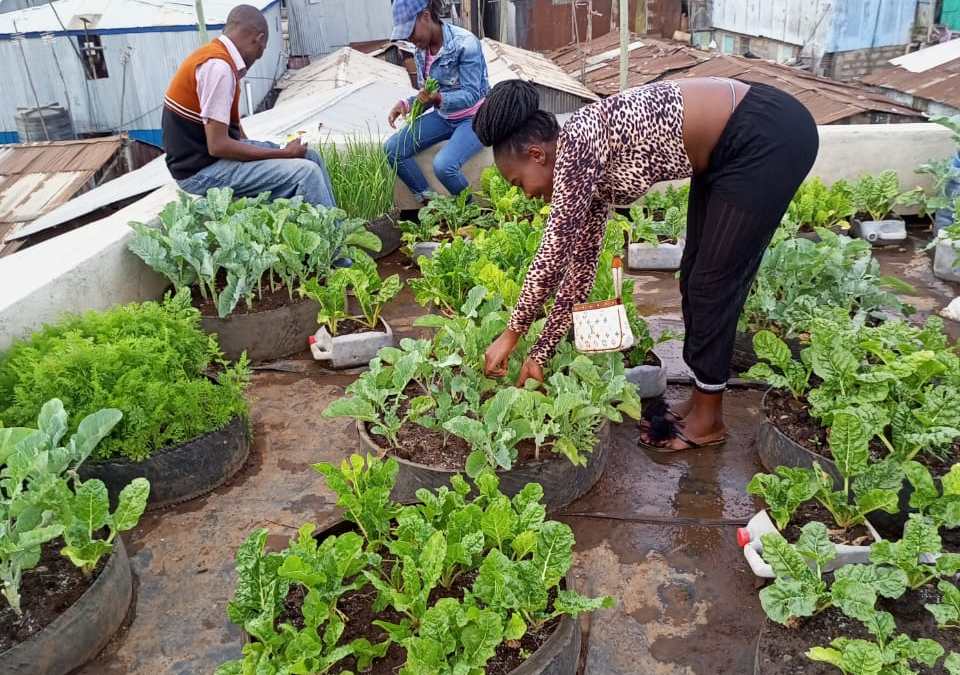
● Limited space so innovative solutions adopted such as vertical gardening, rooftop farming and re-purposing small, unused spaces.
Saving space recycled containers & hanging gardens
● The knowledge and skills gap has been addressed by conducting regular training sessions covering permaculture principles, organic farming techniques, soil management, pest control, and crop rotation
● Climate change and water scarcity: Limited amount of water available for irrigation. Viwandani, like many other urban areas, is vulnerable to the impacts of climate change, including erratic rainfall patterns and water scarcity. These climatic conditions pose challenges for urban farming, particularly in maintaining adequate water supply for irrigation. To address this, the program focused on water conservation and management strategies such as rainwater harvesting and water recycling (kitchen water and bathing water). By implementing these measures, the program has reduced water wastage and ensured efficient water use in urban farms.
● Community Engagement and Ownership: Initially, there was resistance and scepticism among some community members regarding the effectiveness and long-term sustainability of the program. To overcome this challenge, the program emphasised community engagement and participation. Regular community meetings, dialogue sessions, and participatory decision-making processes were conducted to involve the community in program planning and implementation. By fostering a sense of ownership and active participation, the program gained community support and commitment, leading to the success and sustainability of the urban farms.
Report recommendations
Scaling Up and Replication: Given the success and impact of the program in Viwandani, it is recommended to consider scaling up the initiative to other sub-villages of Viwandani informal settlements within the region. This could be achieved through collaboration and continuity of partnership and supporting other local organisations with similar objectives and goals to replicate the program’s model and share best practices. By expanding the program’s reach, more communities can benefit from permaculture education and information, sustainable urban farming practices, improving food security and promoting resilience.
Using all available space to produce a harvest
Strengthening Partnerships: Continual collaboration with local organisations, government agencies and donors is essential to ensure the availability of necessary resources and support. Strengthening existing partnerships and establishing new ones will enhance the program’s capacity to overcome challenges related to resource constraints, access to inputs, and funding. This could be achieved through regular coordination meetings, joint fundraising efforts and knowledge-sharing platforms.
Training and Capacity Building: Continuous training and capacity-building programs for farmers and community members should be prioritised. These programs should focus on advanced permaculture techniques, composting, organic pest management, and soil conservation. Providing access to training resources, workshops, and mentoring will ensure that farmers have the necessary skills and knowledge to maintain productive and sustainable urban farms.
Restoring fertility in under utilised spaces
Education and Awareness: Continued efforts to raise awareness about the importance of sustainable agriculture and environmental conservation should be carried out. This could involve conducting educational campaigns in schools, organizing community events, and disseminating information through various media channels. By educating the broader community about the benefits and practices of permaculture, the program can encourage more individuals to adopt sustainable farming methods and contribute to a healthier and greener environment.
Monitoring and Evaluation: Implementing a robust monitoring and evaluation system is crucial for tracking the program’s progress, identifying areas for improvement, and measuring its impact. Regular assessments of the urban farms’ productivity, environmental sustainability, and community well-being will provide valuable feedback to inform program adjustments and ensure its long-term success.
The way forward
The way forward for the Rafiki Urban Farming program in Viwandani Informal Settlement involves a strategic approach to sustain and expand the program’s impact.
Consolidate and Strengthen Existing Farms: It is crucial to ensure the continued success and productivity of established urban farms. This involves providing ongoing support to farmers, including access to resources, technical guidance and mentorship. Regular monitoring and evaluation should be conducted to identify areas for improvement and provide targeted assistance where needed. By consolidating the existing farms, the program can maintain its sustainability and maximise its impact.
Expand the Program’s Reach: Building on the success achieved in Viwandani, the program should aim to expand its reach to other informal settlements within the region. This can be done by conducting community needs assessments and identifying potential partner organizations or community leaders who can champion the program in new locations. Engaging with local stakeholders and tailoring the program to meet the specific needs and challenges of each community will be crucial for successful replication and expansion.
Foster Knowledge Exchange and Networking: Creating platforms for knowledge exchange and networking among farmers, experts, and stakeholders is essential for continuous learning and innovation. This can be achieved through regular community meetings, workshops, and farmer-to-farmer exchanges. Encouraging the formation of networks or associations among urban farmers will facilitate the sharing of best practices, challenges, and solutions, fostering a supportive and collaborative environment.
Urban farming between buildings and on rooftops
Enhance Value Addition and Market Access: Exploring opportunities for value addition and market access can contribute to the economic sustainability of the program and the farmers involved. This can involve training farmers in post-harvest handling techniques, food processing, and marketing strategies. Collaborating with local markets, restaurants, or food cooperatives to establish direct links between farmers and consumers will ensure fair and sustainable trade relationships.
Secure Long-term Funding: Securing adequate and sustainable funding is crucial to sustain the program’s activities and ensure its long-term impact. The program should explore diverse funding sources, including government grants, corporate social responsibility initiatives, philanthropic organisations, and crowdfunding platforms. Developing a comprehensive fundraising strategy and cultivating partnerships with donors and investors who share the program’s vision will provide the financial stability needed to continue and expand the program
All contributions to the Permafund are warmly welcomed to support permaculture environmental and education projects in Australia and around the world. Gifts, regular tithes and donations to the Permafund over $2.00 are tax deductible in Australia and can be made here. Many thanks.
This year, vocational training in permaculture turns 20. Affectionately known as APT (Accredited Permaculture Training), these courses have been part of Nationally Recognised Training since Permaculture Australia registered an accredited course with Queensland Training in July 2003.
Since then APT has had its ups and downs, and a huge amount of work has been done (largely by volunteers) to bring us to now. In February 2023, the newly reviewed and updated components (units of competency, qualifications and skill sets) were published on the training.gov.au website.
APT falls under what is known as Vocational Education and Training in Australia, meaning that the qualifications and skill sets have met certain standards under the Australian Qualifications Framework (AQF) which means that a Certificate III in Permaculture is equivalent to a Certificate III in Agriculture, or Hospitality, or Childcare etc. Permaculture components, with PER in their codes are part of the Agriculture, Horticulture and Conservation & Ecosystem Management (AHC) training package. Training Packages are nationally recognised, although some aspects of their implementation are State-based – such as funding.
The recent review of the AHC Training Package has coincided with the Federal Government’s Skills Reform initiative. These reforms have ensured that students and employers are central to the training approved by the industry sectors themselves (in the past, the training sector- the providers of the training such as TAFEs – had greater influence over the training provided and this was often at odds with what was needed in the workplace). The new Jobs and Skills Councils (replacing “Industry Clusters”) include opportunities for industry peak bodies to have a seat on the Council. Permaculture Australia will have a seat on the Agribusiness Skills Council.
The review of Permaculture (in conjunction with Organic Production and Composting) was completed in 2022, after 18 months of work and consultation. Qualifications, skill sets and units have been restructured and updated to reflect the skills required to provide for human needs in a way that works with natural processes and ecology. Updates have been made to remove barriers to training delivery and better reflect job tasks. In addition, skills for permaculture have been incorporated throughout agriculture qualifications, as they are useful and necessary across a range of job roles and environments.
Key changes in a nutshell: Five qualifications were revised and updated to incorporate unit changes including merging of content and adjustments to Australian Qualification Framework alignment for some units. Although the Certificate I in Permaculture was initially proposed for deletion it will be retained, as there are successful programs currently delivered and the enrolment trend is increasing.
Twelve new skills sets were developed to meet industry needs related to permaculture fundamentals, including structure, water systems, design, planning community governance and developing strategic plans for permaculture projects.
One existing skill set for a Permaculture Demonstrator was revised to include updated units of competency.
Forty nine permaculture (PER) units of competency were reviewed, including: o Forty eight were revised, with clarification around assessor requirements and rationalisation of knowledge evidence to ensure essential underpinning knowledge required for carrying out permaculture job tasks is captured. o Four units were merged into two. o One new unit was developed based on a previously deleted permaculture unit. o Five units deleted. Two diploma level units that were proposed for deletion at earlier stages of the project were retained. o Selected units are to be included in Certificate I to Diploma level Agriculture qualifications.
Guidance for RTOs for engaging trainers and assessors was included in a newly developed Companion Volume User Guide released along with an updated version of the AHC Companion Volume Implementation Guide and the newly endorsed permaculture qualifications and units.
Accompanying the reviewed Permaculture courses, an Implementation Guide has been written to support the roll out and inform RTOs and trainers, as well as employers, as to how these courses should be understood. There have been many opportunities for engagement with the review process and lots of permaculture people have participated which is great as it means the Units, Qualifications and Skill Sets are now ‘fit for purpose’. Not only that but you will have the chance to participate in and benefit from the roll out of the reviewed courses, if you wish. Training providers, including those offering the PDC, might be interested in partnering with RTOs to offer some components of this training There will be funding available for some programs in some States There will be opportunities for those with current qualifications (including Certificate IV in Training and Assessment) to deliver this training There will also be opportunities to work with the Education Team of Permaculture Australia to update assessment tools and training materials And of course there will be opportunities for study and professional development
It is exciting to note that many of the barriers between the PDC and the accredited training have been removed, and it is now much easier for teachers and trainers to find work in the accredited system (with a TAE qualification, of course). It is also exciting to note that two of the new skill sets have been specifically developed to bridge gaps:
This skill set describes the skills and knowledge for working with clients and community to design and develop private, community or enterprise based permaculture systems in rural and urban environments. Comprised of units: AHCPER417 Investigate and recommend species for a permaculture system AHCPER418 Provide advice on permaculture principles and practices AHCPER419 Design a rural permaculture system AHCPER420 Design an urban permaculture system AHCPER421 Select appropriate technology for a permaculture system AHCPER422 Identify and analyse bioregional characteristics and resources
AHCSS00140 Advanced Permaculture Skill Set – bridges the gap between Diploma of Permaculture and Bachelor Degree in the Higher Education system. This skill set describes advanced skills and knowledge to help individuals to transition into higher education. The units provide skills and knowledge for planning community governance and developing strategic plans for permaculture projects. Comprised of units: AHCPER601 Develop a strategic plan for a permaculture project or enterprise AHCPER602 Plan community governance and decision-making processes AHCPER603 Prepare a sustainable community and bioregional development strategy
If you are interested in the process or want to familiarise yourself with what has been done, please go to the Skills Impact project page and click through to the areas that interest you. You can find the documents that correspond to earlier stages in the process by clicking on the arrows in the flow chart. Finally, Permaculture Australia would like to acknowledge the work of the following people and organisations who participated in the Subject Matter Expert Working Group:
Lis Bastian, Blue Mountains Permaculture Institute Fiona Blackham, GAIA Permaculture Sue Brunskill, Permaculture Australia Rob Fenton, TAFE NSW Robyn Francis, Permaculture College Australia Graeme George, Permaculture Yarra Valley Megan Hall, South Regional TAFE WA Julianne Hartman, Byron Regional Community College Martina Hoeppner, Permaculture West Keri Hopeward, Permaculture SA Lachlan McKenzie, International Permaculture Educators Network Ross Mars, Water Installations Pty Ltd Janet Milllington, Miltech Services Pty Ltd Kushala Prem, Natural Systems Permaculture Nicole Steel, Byron Regional Community College Karen van Huizen, Van Huizen Design Aaron Sorensen, Elemental Permaculture
Virginia Solomon, Permaculture Australia Richard Vinycomb, Byron Regional Community College And our amazing professional training consultants from Skills Impact Ruth Geldard, Industry Skills Standards Specialist, Skills Impact Ron Barrow, Writer, Skills Impact and Nestor Consulting
We all look forward to rolling out our new courses and to energetic participation and enthusiasm from permies everywhere. For further information on the Review and the new components, please contact education@permacultureaustralia.org.au
The newly reviewed Permaculture VET qualifications, skill sets and units are now published on the National Training Register, training.gov.au which means they are available for use by registered training organisations (RTOs).
With the release of the new permaculture training package there has been a major change to the requirements for trainers to deliver accredited permaculture training.
The old package rules for trainers were that you needed to hold at a minimum the qualification you were delivering or a higher qualification. This meant that if you had done your training outside of the Vocational Education Training (VET) framework you couldn’t deliver training no matter how experienced or dedicated a permie you were.
Now with a PDC or other training, relevant industry experience (relevant to the units you teach) and a Trainer and Assessors qualification the door is open.
This is great news as it has been a case of not enough training organisations offering permaculture and not enough qualified trainers. Hopefully with these changes we will see more permaculture in schools, more funded courses and an increase in permies all round.
have the relevant vocational competencies at least to the level being delivered or assessed
can demonstrate current industry skills directly relevant to the training/assessment being delivered
continue to develop their VET knowledge and skills, industry currency and trainer/assessor competence.
Permaculture as a discipline is characterised by some general characteristics, including the Ethics and Principles.
The three key ethical principles identified as underpinning permaculture are:
• Earth Care
• People Care
• Fair Share (set limits and redistribute).
These principles align with rejection of exploitation of the planet, ethical growing
and harvesting of production and regenerative production beyond the principles of organic sustainability.
The Permaculture approach is based on the understanding that everything is inter-related and inter-dependent. A system is composed of related and dependent elements which when in interaction, form a unitary whole. A system is simply an assemblage or combination of things or parts forming a complex whole and inspired by nature.
Permaculture addresses all aspects of human culture, not only food production but how we build, how we organise ourselves and how we utilise all our resources, including human resources.
It is important that these fundamental principles and understandings are applied across all levels of training in permaculture as they are key to understanding and applying permaculture for targeted work outcomes and social development.
Training and assessment in permaculture must be conducted by individuals who understand and live by permaculture ethics and principles and integrate them into their training and assessment practices.
Types of relevant experience and background for permaculture trainers and assessors can include (but is not limited to):
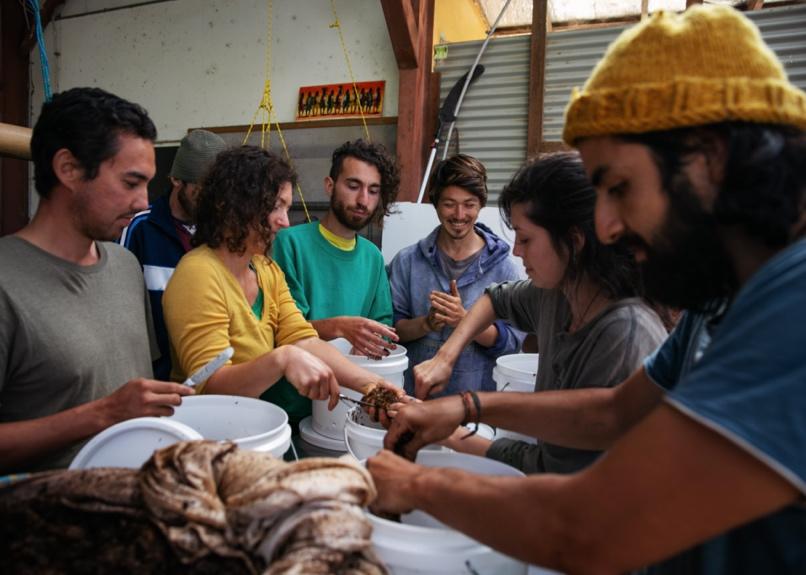
• Permaculture Design Course (PDC) – a globally recognised training course sometimes called a ‘certificate’, although not accredited as such in Australia. PDCs vary substantially, but a good course would normally furnish participants with a syllabus or topic list that would correspond to the knowledge criteria of units of competency in permaculture.
• Experience working on permaculture-based projects
• Permaculture Internships
• Other permaculture qualifications and courses including Advanced Permaculture Courses, Permaculture Teacher Training Courses and other specialist training offered by several permaculture training providers





You must be logged in to post a comment.